About This Shrine
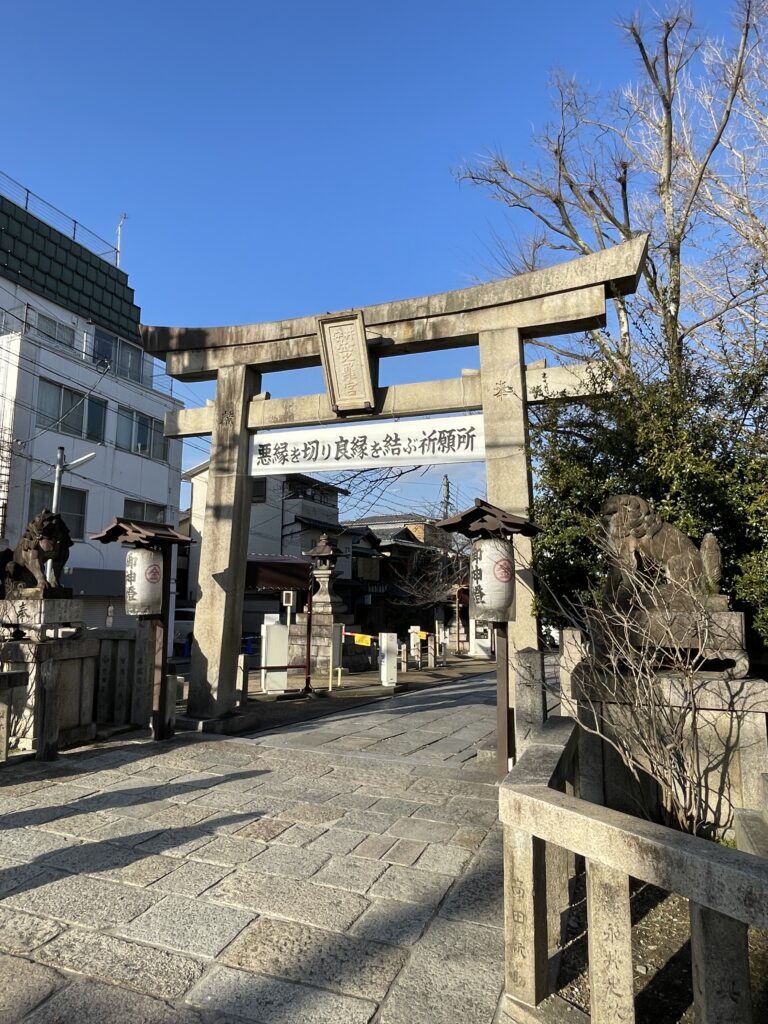
Yasui Konpira-gū, often written as Yasui Konpiragu, is a Shinto shrine in Kyoto known especially for cutting bad ties and inviting good ones.
Among the many en-kiri shrines in Japan, it is often spoken of as one of the most powerful.
But this shrine is not only about cutting something away.
Its prayer is more complete than that: to cut harmful ties, and then to open the way for better connections.
Those ties may be with people, habits, illness, misfortune, or anything that keeps someone from moving forward.
In that sense, Yasui Konpira-gū is not simply a shrine of endings.
It is also a shrine of new beginnings.
Photo Gallery
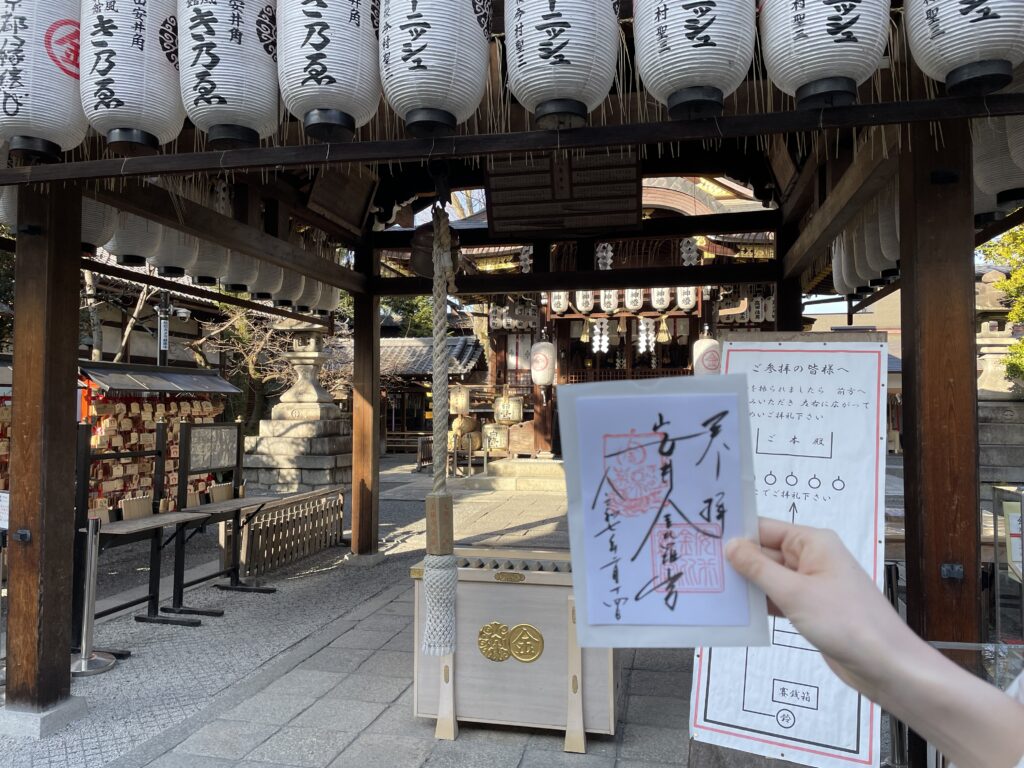
Cutting Bad Ties, Inviting Good Ones
The word en means a tie, bond, or connection.
In Japanese daily life, en can refer to many kinds of relationships: a person you meet, a job, a place, a habit, or even a situation that keeps returning.
At Yasui Konpira-gū, the prayer is not to cut all ties.
It is to cut akuen, harmful or unwanted ties, and to receive ryōen, good ties.
That difference is important.
A visit here does not mean rejecting connection itself.
It means asking for the strength to let go of what is harmful, so that something better can enter.
This is why many people visit the shrine not only for relationships, but also for things like illness, addiction, gambling, or repeated bad luck.
The prayer is simple, but deep:
May what should end come to an end.
May what should begin be allowed to begin.
The Stone for Cutting Bad Ties and Forming Good Ones
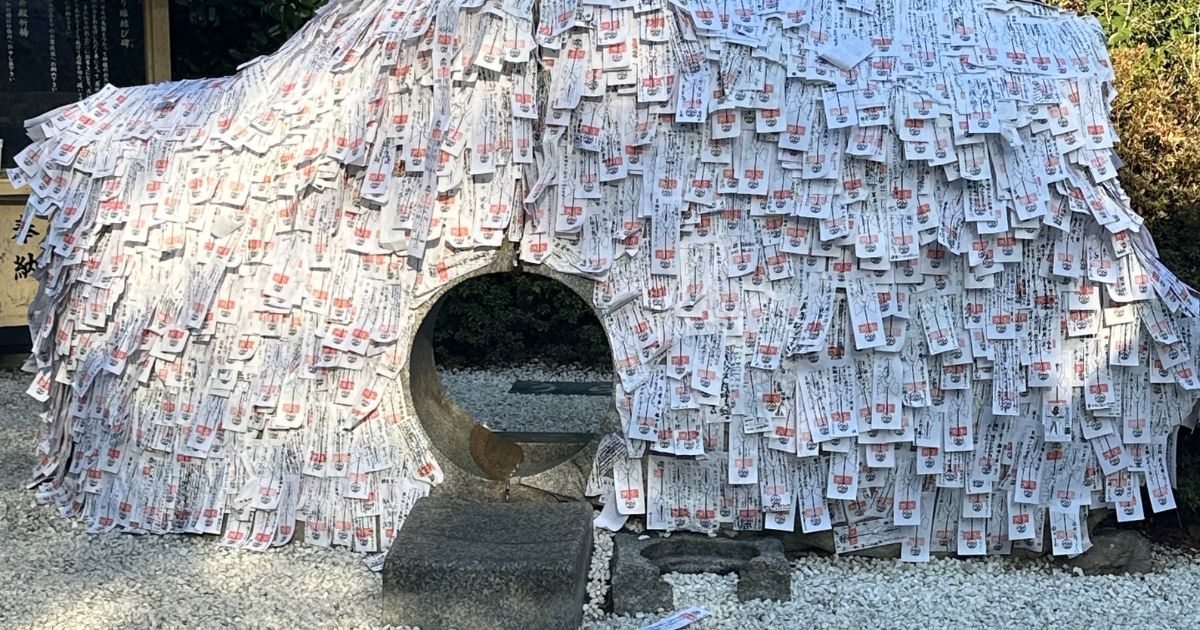
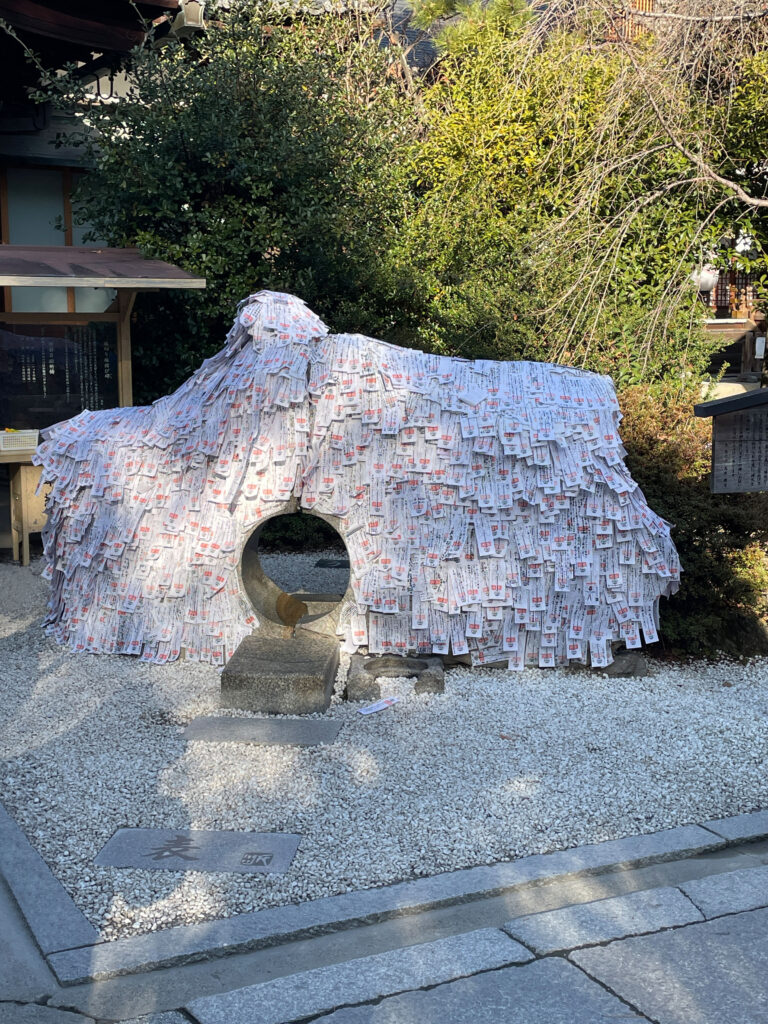
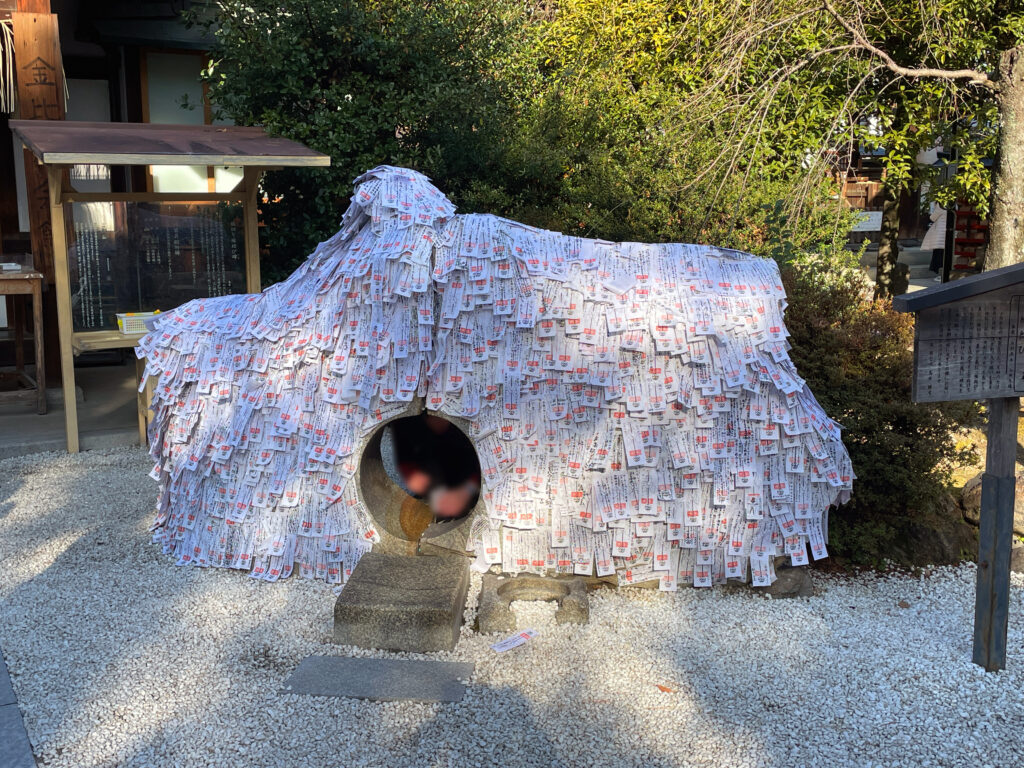
One of the most famous places in the shrine grounds is a large stone monument called the Enkiri-Enmusubi Ishi.
The name means “the stone for cutting ties and forming ties.”
It is often translated as the Enkiri-Enmusubi Stone.
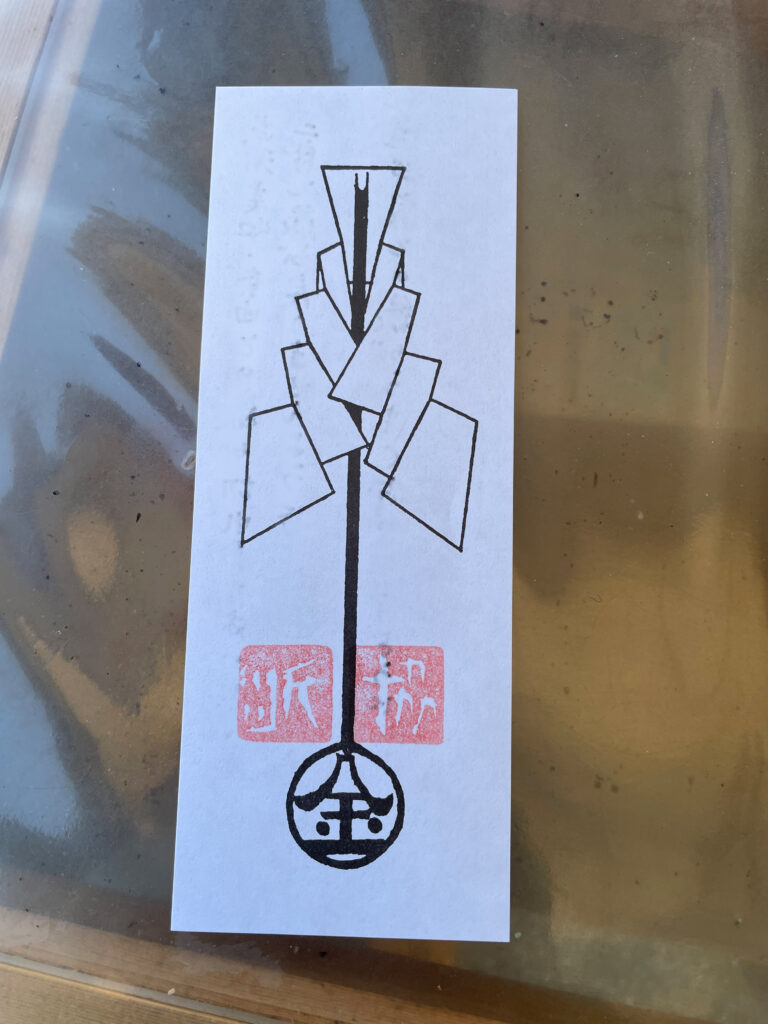
The stone is covered with many white paper amulets called katashiro, and at its center is a small round hole.
Visitors write their wishes on a katashiro, then pass through the hole while holding it.
First, they pass from the front to the back, praying that the bad tie will be cut.
Then they pass from the back to the front, praying that a good tie will be formed.
After that, they paste the katashiro onto the stone.
The stone can look intense at first.
So many wishes are layered on top of one another that the surface almost disappears beneath the white papers.
But that is also what makes the place unforgettable.
Each paper carries someone’s private wish to leave something behind and move toward something better.
How to Pray at the Stone
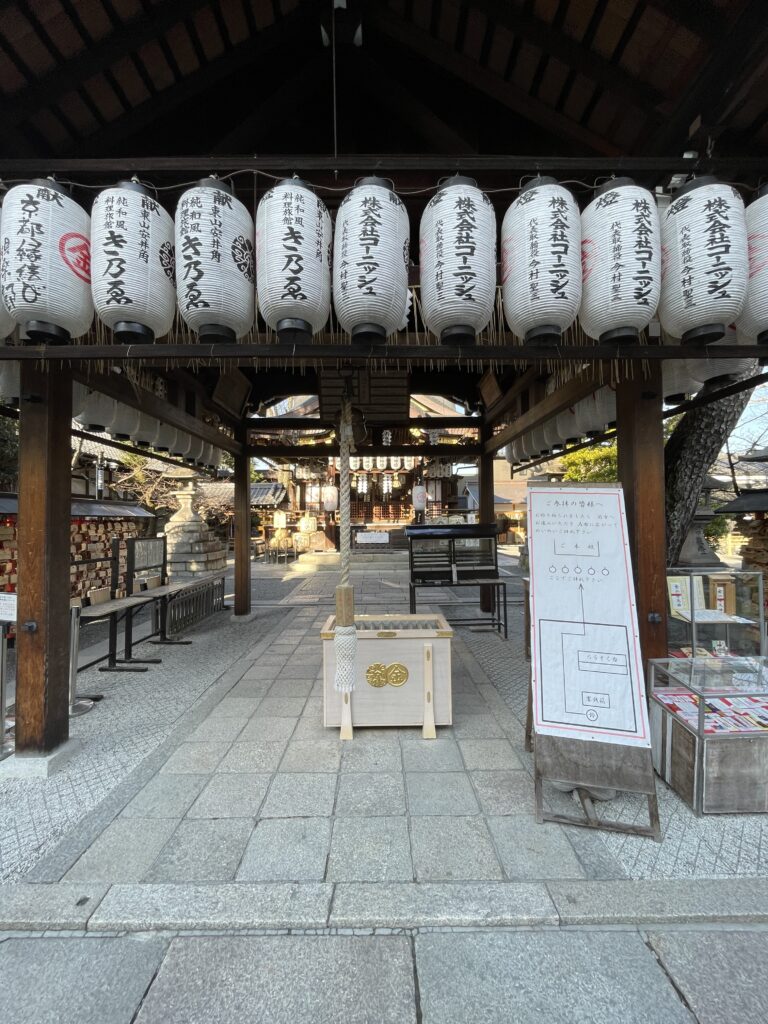
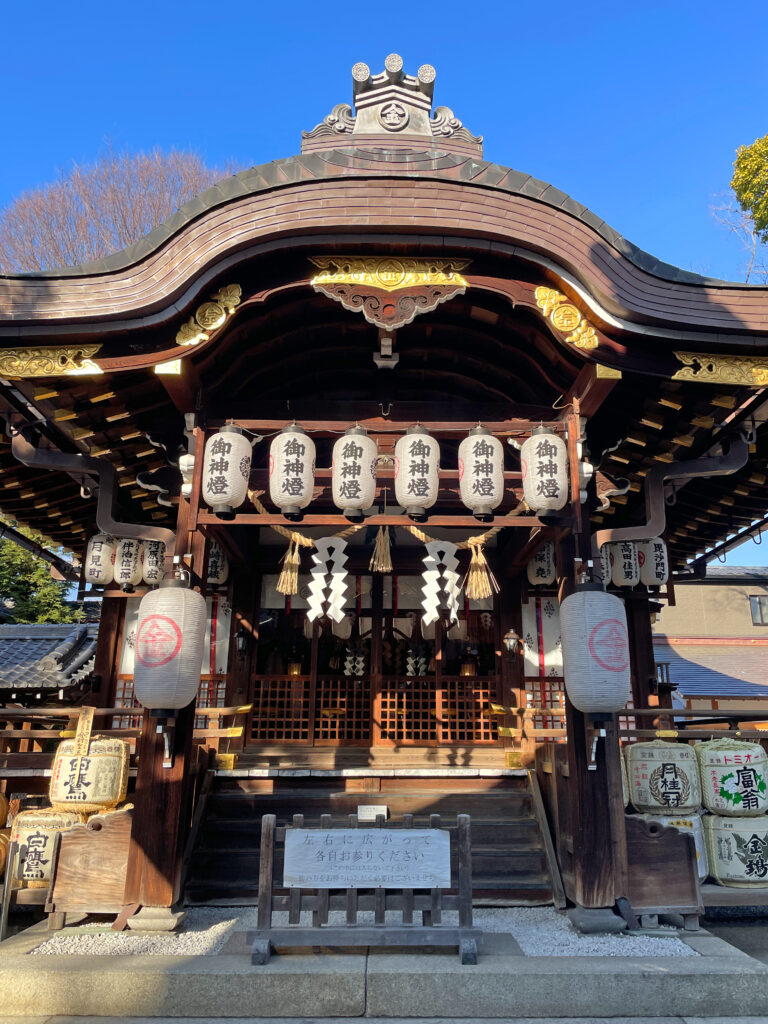
Before praying at the stone, it is best to visit the main shrine first.
This is the proper beginning.
After that, take a katashiro, the paper amulet used for the prayer.
Write the tie you want to cut and the tie you want to invite.
Some people write a person’s name.
Others write a situation, habit, illness, or problem.
Because the katashiro will be pasted onto the stone, it is better not to write anything you would not want others to see.
Initials or a simple description are enough.
Then, holding the katashiro, pass through the hole from the front side to the back.
As you do, pray for the harmful tie to be cut.
Next, pass back through the hole from the back side to the front.
This time, pray for the good tie to be formed.
Finally, paste the katashiro onto the stone.
If passing through the hole is difficult, you do not need to force yourself.
Writing your wish on the katashiro and pasting it onto the stone is also a way to offer your prayer.
Why Yasui Konpira-gū Feels So Powerful
Yasui Konpira-gū is often described as a very strong shrine because the prayer here is direct.
People do not come only with vague wishes.
Many come with something specific they want to end.
That can make the atmosphere feel serious.
The shrine’s main deity, Emperor Sutoku, is connected with the idea of cutting away desire and attachment.
Because of this, Yasui Konpira-gū became known as a place to pray for the severing of bad ties.
But the shrine does not stop at cutting.
It also points toward connection.
After passing through the stone to cut a bad tie, visitors return through it to invite a good one.
The movement itself shows the meaning of the prayer.
Let go.
Return.
Begin again.
Final Thoughts
Yasui Konpira-gū is one of Kyoto’s most memorable shrines.
Its atmosphere may feel stronger and more serious than many other shrine visits.
But the heart of the prayer is not negative.
It is about release, renewal, and the courage to move toward a better connection.
Bad ties are cut.
Good ties are invited.
And between those two movements, there is a quiet wish to begin again.