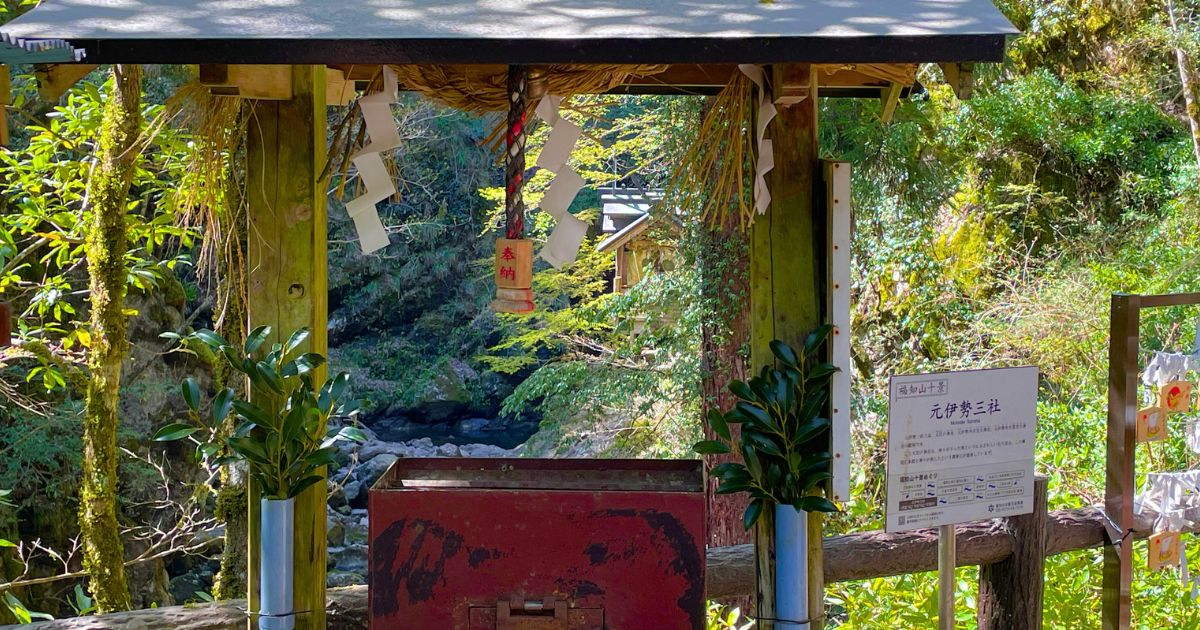
About This Shrine
Moto-Ise Ama-no-Iwato Shrine is a Shinto shrine in the northern Kyoto area, deeply connected with the Moto-Ise tradition.
It stands at the foot of Iwatoyama, a mountain where Amaterasu-Ōmikami is said to have once descended.
The kami enshrined here are Kushi-iwamado-no-Mikoto and Toyo-iwamado-no-Mikoto. These kami are connected with gates, entrances, and boundaries in the world of kami.
Because of this, the shrine is often associated with protection, removing misfortune, opening the way forward, and good fortune.
Unlike Kōtai-jinja, which has a forested approach and a thatched main shrine, Ama-no-Iwato Shrine feels closer to rock, water, and the mountain itself.
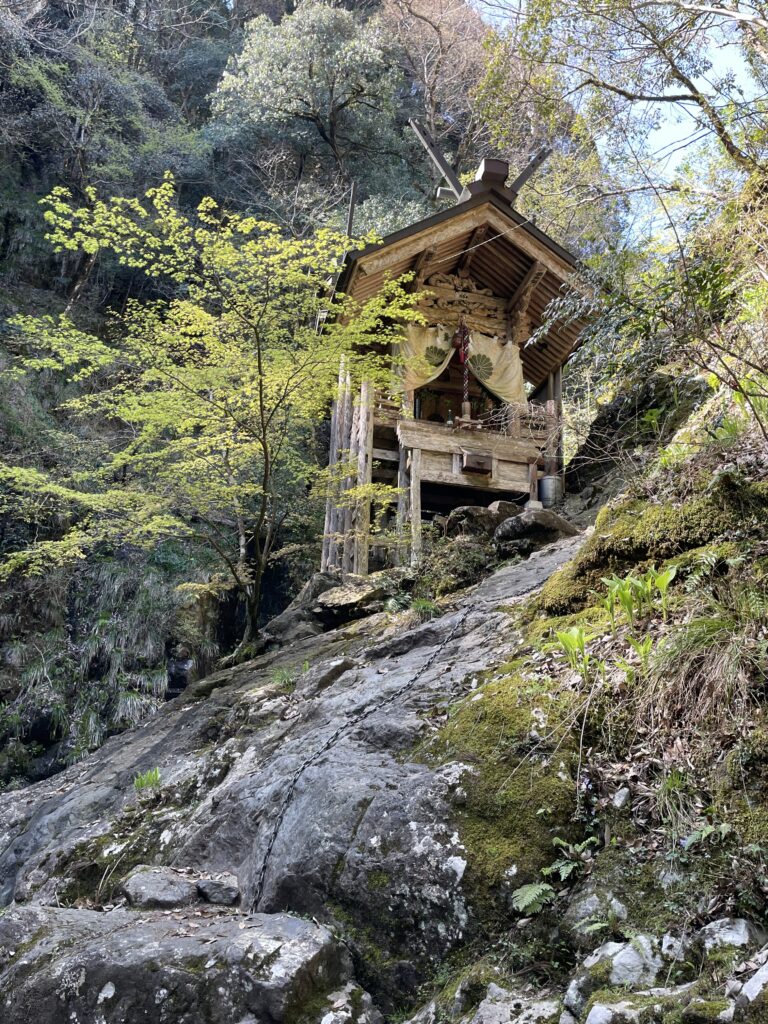
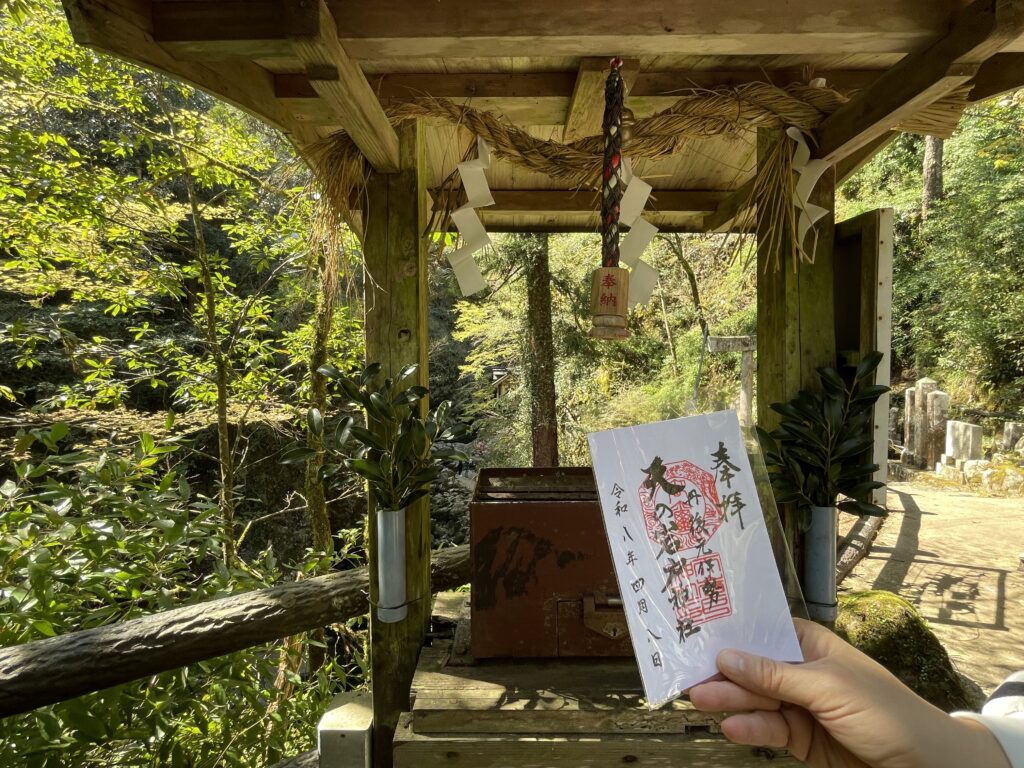
The shrine is set in a quiet gorge, surrounded by large rocks, a flowing stream, and deep greenery. Its atmosphere is simple, remote, and powerful.
Photo Gallery
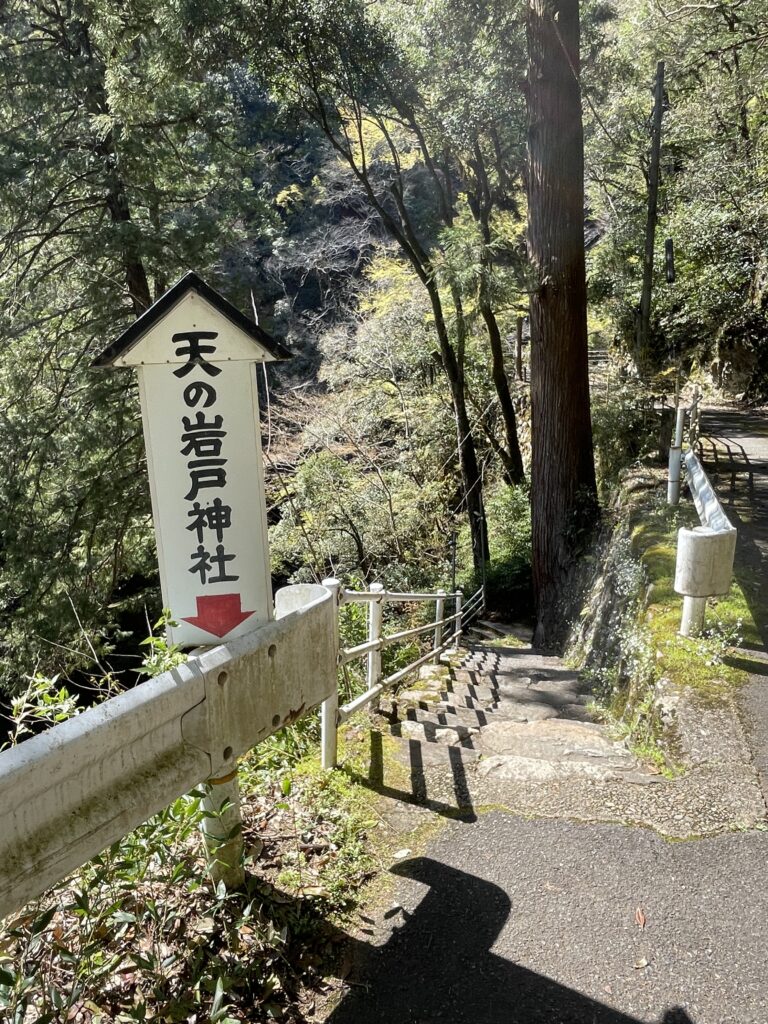
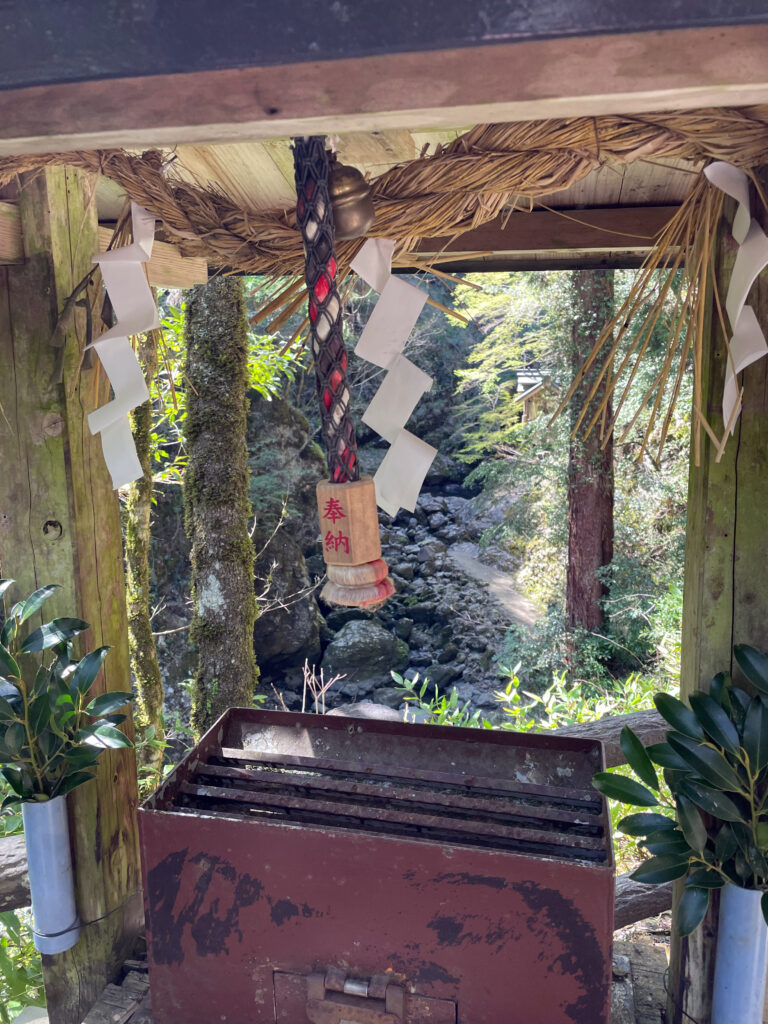
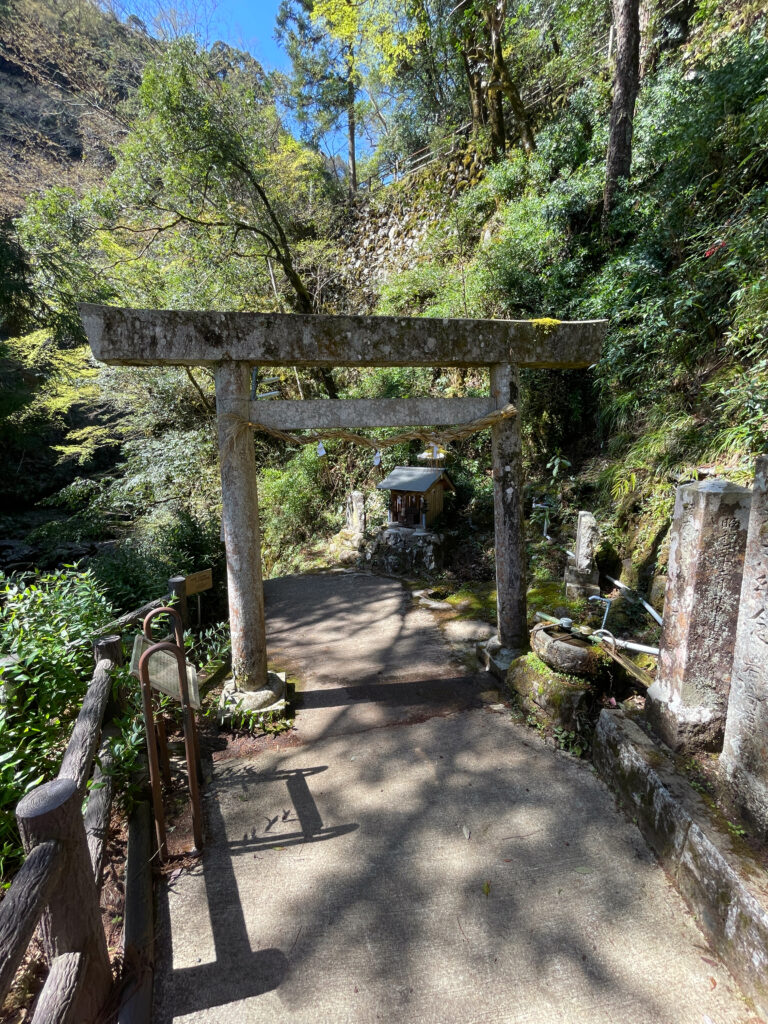
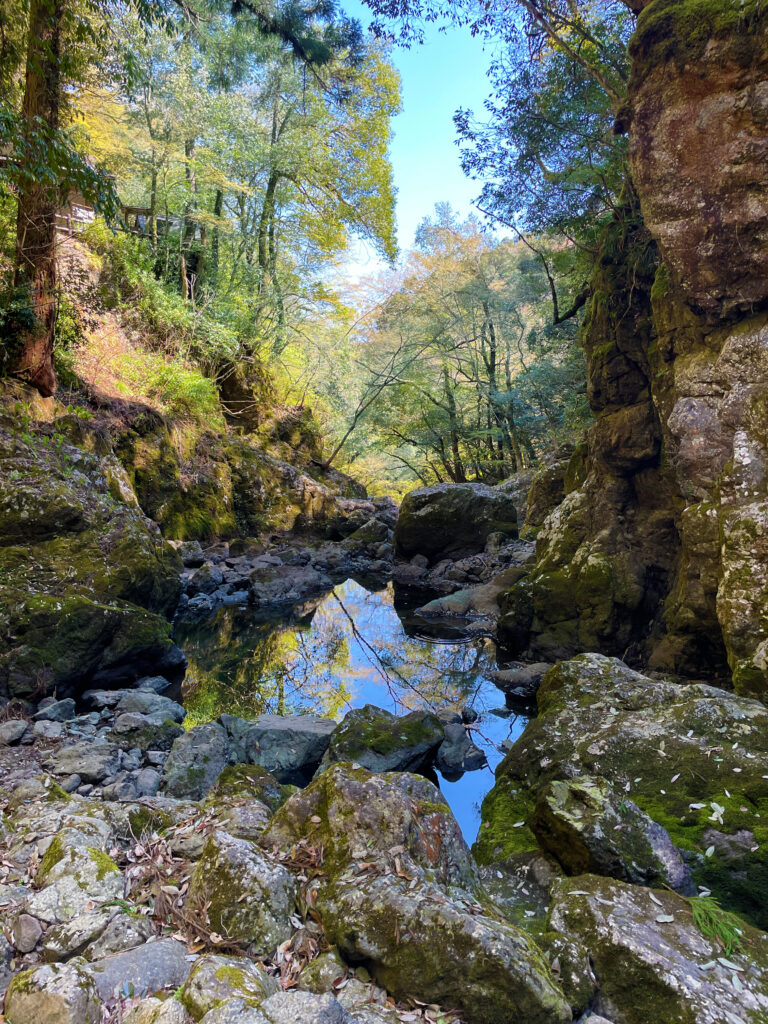
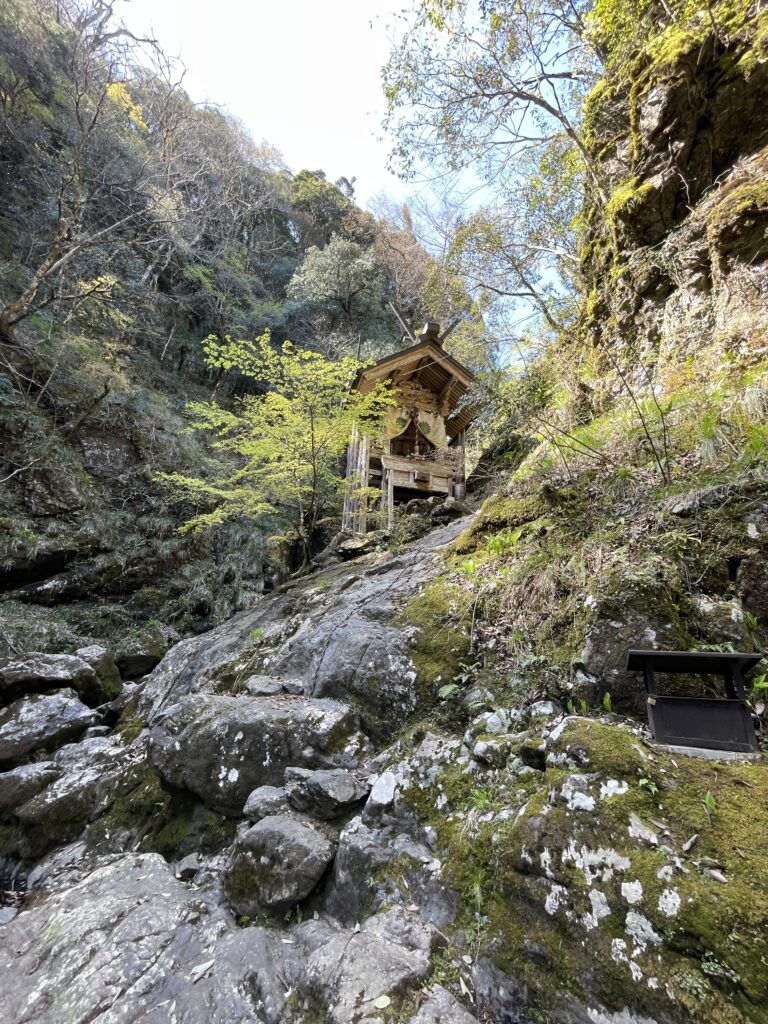
A Shrine Connected with Iwatoyama
Ama-no-Iwato Shrine is closely connected with Iwatoyama.
In the Moto-Ise tradition of this area, Iwatoyama is not just a mountain in the background.
It is remembered as a place connected with the descent of kami.
The name Ama-no-Iwato also recalls the famous myth of the heavenly rock cave, where Amaterasu-Ōmikami once hid herself and the world fell into darkness.
Here, the name, the rocks, and the mountain landscape bring the image of the heavenly rock cave close to the visitor.
That is what makes this shrine feel different from the nearby Naikū and Gekū shrines.
The Kami of Ama-no-Iwato Shrine
The kami of Ama-no-Iwato Shrine are Kushi-iwamado-no-Mikoto and Toyo-iwamado-no-Mikoto.
These kami are connected with the idea of a gate or entrance in the world of kami.
Because of this, the shrine feels naturally linked with the image of a boundary.
There is the boundary between mountain and water.
There is the boundary between the human path and the place of kami.
And there is the boundary suggested by the name Ama-no-Iwato itself: the rock door between light and darkness, hiding and appearing.
For visitors following the Moto-Ise tradition, this shrine adds a different layer to the story.
Kōtai-jinja is connected with Amaterasu-Ōmikami and Moto-Ise Naikū.
Toyouke Daijinja is connected with Toyouke-no-Ōkami and Moto-Ise Gekū.
Ama-no-Iwato Shrine brings the story into a wilder landscape of rocks, water, and the mountain.
Rocks, Water, and the Gorge
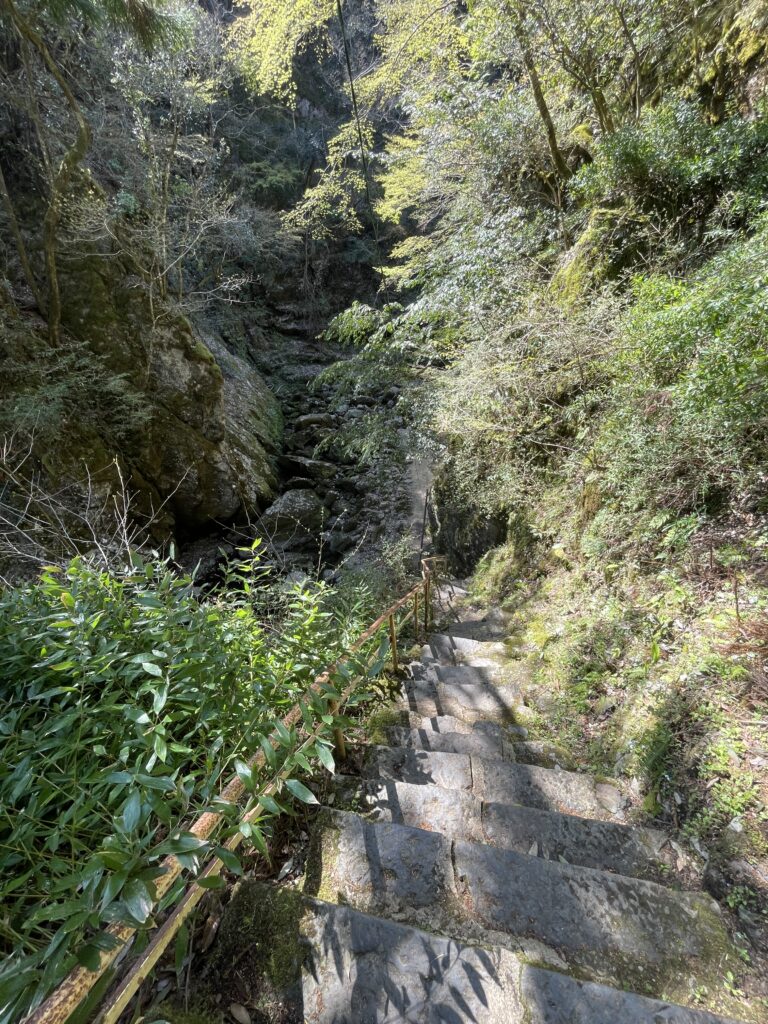
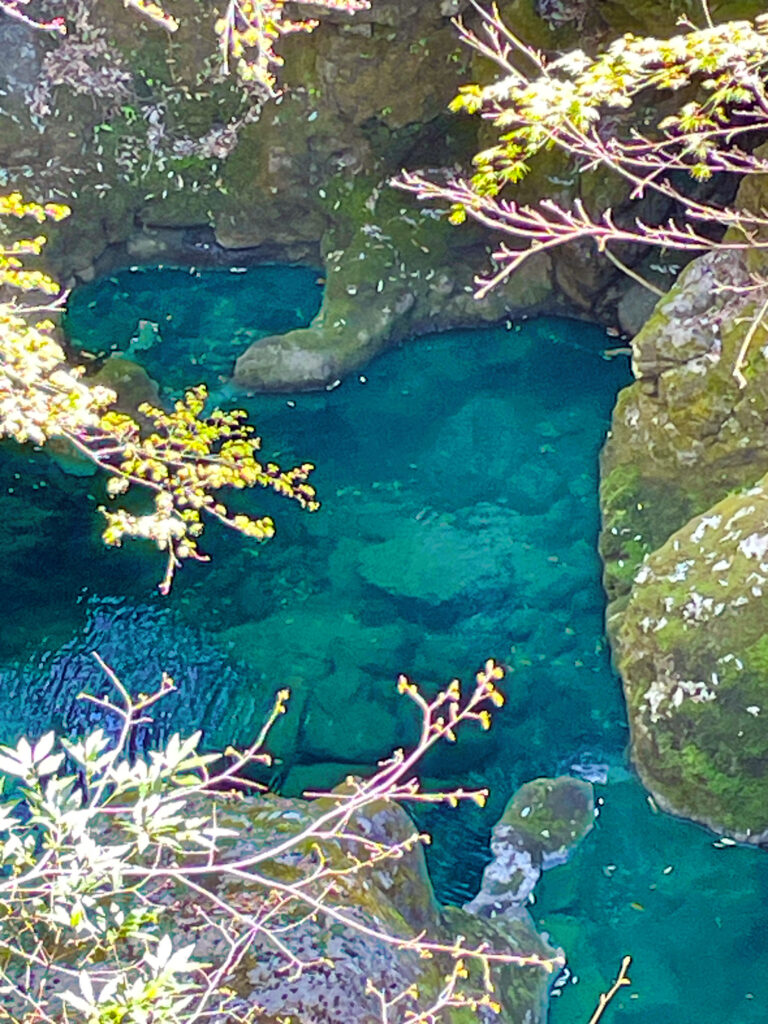
One of the strongest impressions of Ama-no-Iwato Shrine is the gorge.
Large rocks, old trees, and flowing water come together in a narrow space.
The shrine does not feel separated from nature.
It feels as if the shrine building, the rocks, and the stream are all part of the same place.
Among the most important features here are the Goza-ishi, the large rock where the kami are said to have sat, and the Kagura-iwa, a rock connected with kagura.
These stones give the shrine a strong sense of older worship.
Before large shrine buildings became common, rocks, mountains, trees, and water were often places where people felt the presence of kami.
At Ama-no-Iwato Shrine, that older feeling is still easy to sense.
The Main Shrine and the Chains
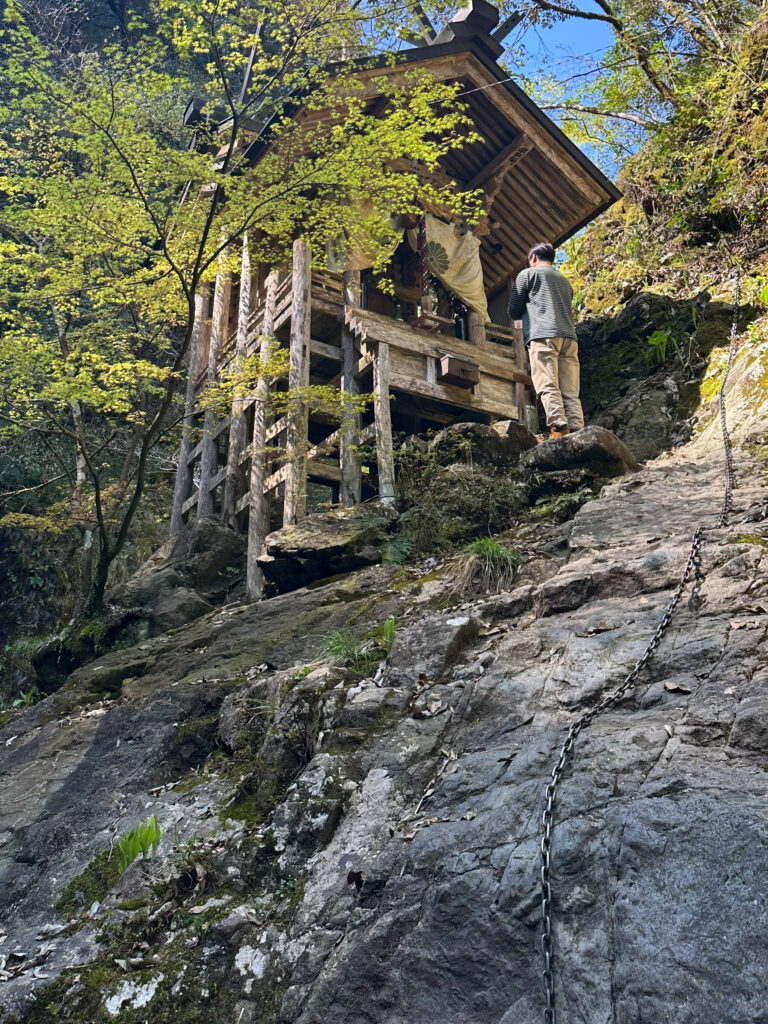
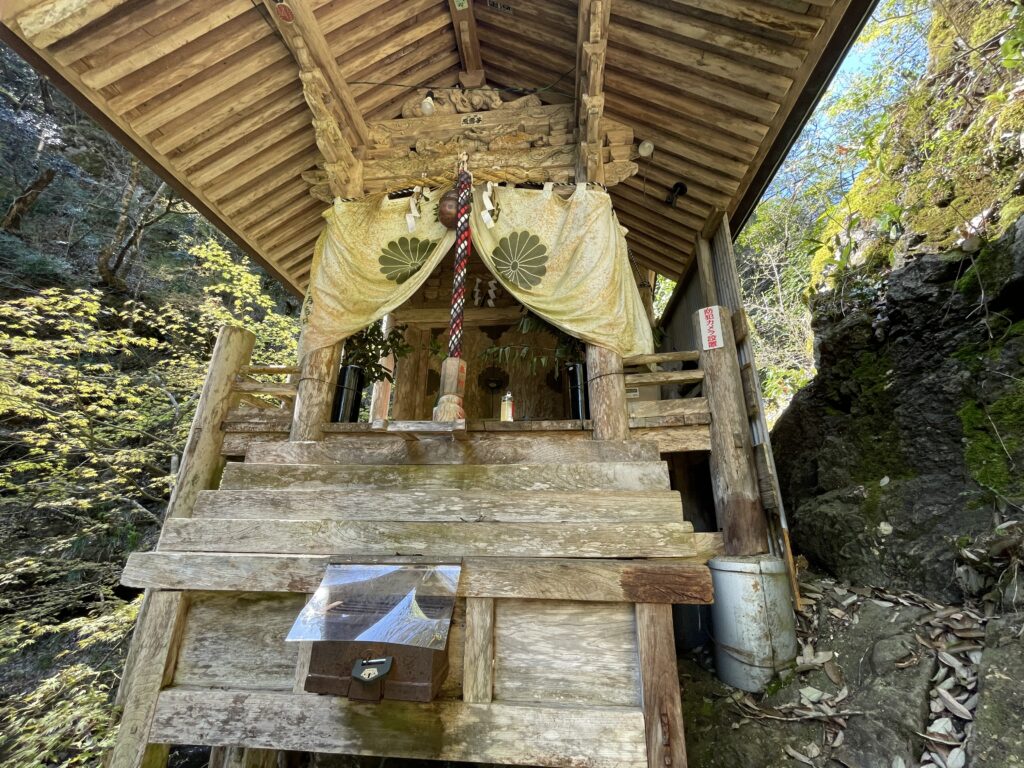
The main shrine building stands on the rock.
To reach it, visitors climb carefully with the help of chains.
Because the shrine is so closely connected with the rock face, the act of worship feels tied to the mountain itself.
This makes the shrine feel very different from a flat, open shrine ground.
If the rocks are wet or the path feels unsafe, it is better to pray from a safe place below.
The important thing is not to force the climb.
It is to visit with care and respect.
Visiting with Kōtai-jinja
Ama-no-Iwato Shrine is often visited together with Moto-Ise Naikū Kōtai-jinja.
The two shrines are close in meaning, but their atmospheres are very different.
Kōtai-jinja has the feeling of a forest shrine connected with Amaterasu-Ōmikami’s journey to Ise.
Ama-no-Iwato Shrine feels more like a place where rocks, water, and the mountain shape the act of worship.
Visiting both helps the Moto-Ise tradition feel more complete.
One shrine gives the story a clear center.
The other gives it depth, texture, and the feeling of an older landscape.
Read the Moto-Ise Naikū Kōtai-jinja Article Here
Visiting with the Moto-Ise Three Shrines
Ama-no-Iwato Shrine is one of the Moto-Ise Three Shrines.
The other two are Moto-Ise Naikū Kōtai-jinja and Moto-Ise Gekū Toyouke Daijinja.
Kōtai-jinja is connected with Amaterasu-Ōmikami and the tradition of Moto-Ise Naikū.
Toyouke Daijinja is connected with Toyouke-no-Ōkami and the tradition of Moto-Ise Gekū.
Ama-no-Iwato Shrine is connected with Iwatoyama, the rock-cave image, and the mountain landscape.
Together, the three shrines show different sides of the Moto-Ise tradition.
Light, food, mountain, rock, water, and forest all appear in one connected area.
Read the Moto-Ise Gekū Toyouke Daijinja Article Here
What to Notice When You Visit
When visiting Ama-no-Iwato Shrine, first notice how close everything feels.
The rocks, the stream, the trees, and the shrine building are not spread out in a wide open space.
They gather tightly around the gorge.
The Goza-ishi and Kagura-iwa are also important.
They are not decorative stones.
They are part of the memory of worship in this place.
The chain leading to the main shrine is another point to notice.
It shows how closely the shrine is tied to the rock face.
When walking or climbing, take care of your footing and follow the signs and local guidance.
This is a place where respect also means moving slowly and safely.
Final Thoughts
Moto-Ise Ama-no-Iwato Shrine is one of the most striking places in the Moto-Ise tradition of northern Kyoto.
It does not impress through size.
It impresses through rock, water, forest, and the feeling of a place shaped by the mountain.
The shrine is connected with Iwatoyama, the image of Ama-no-Iwato, and the older forms of kami worship found in natural places.
For anyone interested in Moto-Ise, this shrine gives the story a different kind of depth.
Kōtai-jinja helps us follow the journey of Amaterasu-Ōmikami toward Ise.
Ama-no-Iwato Shrine reminds us that the story also belongs to mountains, stones, and water.
Together, they show that Moto-Ise is not only a route of movement.
It is also a landscape of memory.