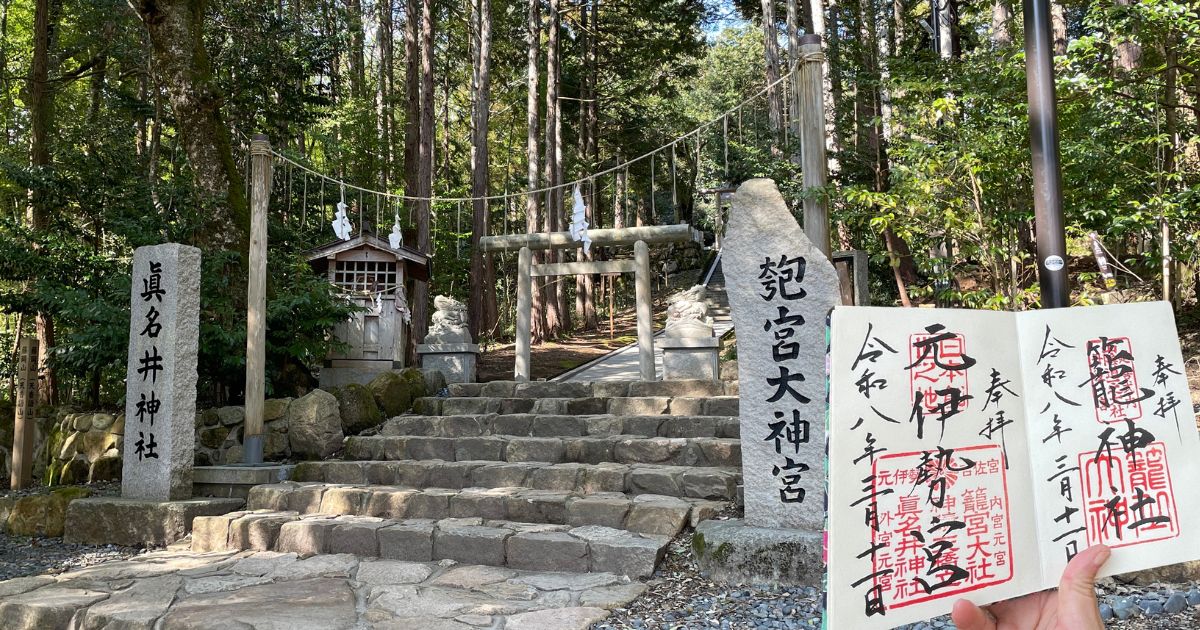
About This Topic
Today, Ise Jingū in Mie Prefecture is known as the home of Amaterasu-Ōmikami.
But before Amaterasu-Ōmikami was enshrined at the present Ise Jingū, tradition says that she was carried from place to place in search of the most suitable location.
The places connected with this journey are often called Moto-Ise.
In the context of shrine history, the name can be understood as “former Ise Jingū.”
This article introduces representative Moto-Ise shrines and related sites that are still visited today.
It is not a complete list of every Moto-Ise tradition.
There are many theories, and some places have more than one possible location.
Instead, this guide is meant as a simple starting point.
Each shrine name can lead to a more detailed shrine article.
What Does Moto-Ise Mean?
Moto-Ise refers to the temporary sites where Amaterasu-Ōmikami was enshrined before she finally came to rest at the present Ise Jingū.
The story begins around the 1st century BCE, during the reign of the 10th Emperor Sujin.
At that time, an epidemic spread through the land.
Amaterasu-Ōmikami had originally been worshipped within the imperial palace, but Emperor Sujin felt that enshrining such an important kami inside the palace was too awe-inspiring.
So the princess Toyosukiiri-hime moved Amaterasu-Ōmikami outside the palace and enshrined her temporarily at Yamato Kasanui-no-Mura, in present-day Nara Prefecture.
This is often understood as the beginning of the Moto-Ise tradition.
Later, during the reign of the 11th Emperor Suinin, Yamato-hime took over this role.
She left Yamato Province, present-day Nara Prefecture, and traveled through several regions in search of the most suitable place to enshrine Amaterasu-Ōmikami permanently.
This journey is sometimes described in a vivid, symbolic way:
Yamato-hime is said to have carried Amaterasu-Ōmikami on her back.
Along the way, temporary shrines were built, and Amaterasu-Ōmikami was enshrined there for a time.
These temporary places are what we now call Moto-Ise.
At the end of the journey, Yamato-hime reached Ise.
Seeing a land blessed with both the sea and the mountains, Amaterasu-Ōmikami is said to have chosen Ise as her eternal home.
Today, Yamato-hime herself is enshrined as Yamato-hime-no-Mikoto at Yamato-hime-no-miya, a branch shrine of Naikū, the Inner Shrine of Ise Jingū.
In simple terms, Moto-Ise sites are the earlier places on the long journey that led to the present Ise Jingū.
Representative Moto-Ise Sites Still Visited Today
Moto-Ise Naikū Kōtai-jinja
Moto-Ise Naikū Kōtai-jinja is one of the Moto-Ise Three Shrines in Fukuchiyama, Kyoto.
It is often introduced as the former Inner Shrine of Moto-Ise, connected with Amaterasu-Ōmikami.
This is one of the clearest places to begin when exploring Moto-Ise.
Moto-Ise Gekū Toyouke Daijinja
Moto-Ise Gekū Toyouke Daijinja is another shrine in the Moto-Ise Three Shrines of Fukuchiyama.
It is connected with Toyouke-no-Ōkami, who is also enshrined at the Outer Shrine of Ise Jingū.
For readers interested in the origin stories of both Naikū and Gekū, this shrine is an important stop.
Moto-Ise Ama-no-Iwato Shrine
Moto-Ise Ama-no-Iwato Shrine is the third shrine of the Moto-Ise Three Shrines.
Its name recalls the famous myth of the Heavenly Rock Cave, where Amaterasu-Ōmikami once hid herself away.
It is often visited together with the Moto-Ise Naikū and Gekū shrines in Fukuchiyama.
Kono-jinja
Kono-jinja is located in the Tango region of Kyoto and is often called Moto-Ise Kono-jinja.
It is closely connected with the origin tradition of Ise Jingū’s Outer Shrine.
As the ichinomiya of the old Tango Province, it is also an important shrine in its own right.
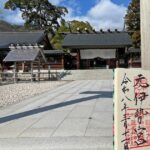
Manai-jinja
Manai-jinja is the inner shrine, or okumiya, of Kono-jinja.
It is often visited together with Kono-jinja as part of the Moto-Ise tradition in the Tango region.
Compared with the main shrine, it has a quieter and more secluded atmosphere.
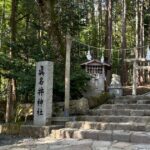
Hibara-jinja
Hibara-jinja stands in Sakurai, Nara, within the wider grounds of Ōmiwa Shrine.
It is associated with Yamato Kasanui-no-Mura, one of the earliest places connected with Amaterasu-Ōmikami outside the imperial palace.
Its three-ringed torii gate and lack of a main shrine building make it one of the most distinctive Moto-Ise sites.
Sasahata-jinja
Sasahata-jinja is located in Uda, Nara.
It is connected with early traditions about the journey of Yamato-hime from present-day Nara toward Ise.
For readers tracing the beginning of the Moto-Ise route, this is an important place to know.
Aki-jinja
Aki-jinja is also located in Uda, Nara.
It is associated with another Moto-Ise tradition connected with Yamato-hime’s journey.
Together with Sasahata-jinja, it shows how the Uda region preserves more than one layer of Moto-Ise memory.
Kanbe-jinja
Kanbe-jinja is located in Iga, Mie Prefecture.
It is connected with the tradition of Anaho-no-Miya, one of the temporary sites on the journey toward Ise.
This shrine helps show how the route from Nara to Ise was remembered through several places.
Tsumie-jinja
Tsumie-jinja is located in Iga, Mie Prefecture.
It is associated with another site connected with Yamato-hime’s journey.
Today, it remains a local shrine while also preserving a link to the wider Moto-Ise tradition.
Hikumo-jinja
Hikumo-jinja is located in Kōka, Shiga Prefecture.
It is associated with Kōka Hikumo-no-Miya in the tradition of Yamato-hime.
This site shows that Moto-Ise traditions extend beyond Nara, Kyoto, and Mie.
Tenjin-jinja / Ikuragawa-no-Miya Site
Tenjin-jinja in Mizuho, Gifu Prefecture, is connected with the site of Ikuragawa-no-Miya.
According to local tradition, Amaterasu-Ōmikami was once enshrined here before the final move to Ise.
It is a useful place for understanding how the Moto-Ise journey is remembered across several old provinces.
Karahino-jinja
Karahino-jinja is located in Tsu, Mie Prefecture.
It is associated with one of the sites connected with Yamato-hime’s journey.
Because there are different interpretations, it is best introduced as a shrine related to the Moto-Ise and Yamato-hime traditions.
Iino-Takamiya Kōyama-jinja
Iino-Takamiya Kōyama-jinja is located in Matsusaka, Mie Prefecture.
It has long been connected with Iino-Takamiya, a temporary site related to Amaterasu-Ōmikami.
This shrine helps bridge the wider Moto-Ise journey with the final arrival in Ise.
Takihara-no-Miya and Takihara-no-Narabi-no-Miya
Takihara-no-Miya and Takihara-no-Narabi-no-Miya are branch shrines of Ise Jingū in Taiki, Mie Prefecture.
They are special cases because they are now part of Ise Jingū itself.
Even so, Takihara-no-Miya is often introduced as a Moto-Ise-related place connected with Yamato-hime’s journey.
Other Moto-Ise Traditions
The places listed above are not the only Moto-Ise-related sites.
There are other traditions, other possible locations, and other shrines connected with the journey of Amaterasu-Ōmikami.
Some traditions count twenty-seven temporary sanctuaries.
But because several locations may be connected with the same stage of the journey, the number of present-day shrines and related places can become much larger.
For this article, the list is limited to representative places that are still visited today and can be introduced as living shrines or shrine-related sites.
Other theories and related places may be added separately in the future.
Final Thoughts
Moto-Ise is not only about finding “the place before Ise Jingū.”
It is about following a long journey.
Before Amaterasu-Ōmikami came to be enshrined at the present Ise Jingū, she was moved out of the imperial palace and worshipped in temporary places.
Toyosukiiri-hime began that movement.
Yamato-hime continued it, traveling from present-day Nara through many regions until she reached Ise.
Today, many Moto-Ise sites are still quiet places of worship.
Some are famous.
Some are small.
Some are deeply connected with local tradition.
Together, they remind us that Ise Jingū did not appear in isolation.
It stands at the end of a long journey, remembered across many places in Japan.