Introduction: Why “Shrine” Can Be Confusing
In English, Japanese sacred places are often simply called “shrines.”
And most of the time, that is perfectly fine. If you say “Shinto shrine,” people will understand what you mean.
But in Japanese, things are a little more layered.
The word “jinja” is often used as a general word for a Shinto shrine. In that sense, yes, jinja can mean “shrine.” But at the same time, Jinja is also one specific shrine title, alongside names such as Jingū, Gū, Daijingū, Taisha, and Sha.
So “shrine” is a helpful English umbrella word.
But “Jinja” is not the whole umbrella.
It is also one name under that umbrella.
A little confusing? Yes.
Very Japanese? Also yes.
These titles are called shago in Japanese. They are not always a simple modern ranking system, but they do carry history, tradition, and the character of each shrine.
In other words, the ending of a shrine name is not just a label.
It can quietly tell you what kind of story the shrine carries.
Jingū(神宮): Shrines Connected with the Imperial Line
Jingū is one of the most special shrine titles.
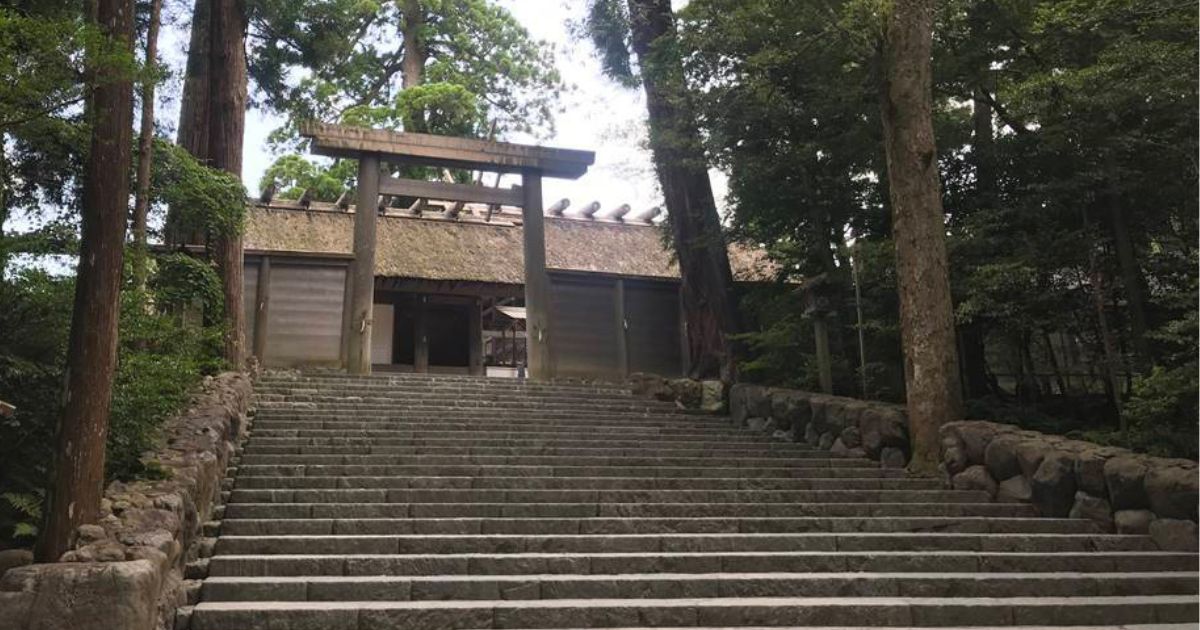
Shrines with this title often have a deep connection with the Imperial family, imperial ancestors, or kami closely tied to the origin of Japan. Ise Jingū is the most important example. It enshrines Amaterasu Ōmikami, the ancestral kami of the Imperial family.
Other examples include Meiji Jingū, Heian Jingū, Kashima Jingū, and Katori Jingū.
When you see the word Jingū, it usually suggests that the shrine holds a particularly important place in Japanese history, mythology, or imperial tradition.
It is not just “a shrine with a fancy name.”
The name itself carries a sense of weight.
Gū / Miya(宮): Shrines Connected with Important Figures
The character 宮 can be read as gū or miya, depending on the shrine name.
You can see it in names such as Tōshōgū and Tenmangū.
This title is often used for shrines connected with emperors, members of the Imperial family, or important historical figures. For example, Tenmangū shrines are associated with Sugawara no Michizane, a scholar and statesman who later came to be revered as a kami of learning.
Gū and miya can feel a little difficult at first because the reading changes.
But the idea is simple enough: when you see this title, the shrine is often connected with someone or something of special historical, cultural, or spiritual importance.
In other words, it is not just a place.
It is also a memory.
Daijingū(大神宮): Shrines Connected with Ise Worship
Daijingū means “Great Jingū,” but in practice, it is especially associated with shrines connected to the worship of Ise Jingū.
Tokyo Daijingū is a well-known example. It was created so people in Tokyo could worship the kami of Ise Jingū from afar.
This idea is important in Shinto.
A sacred connection is not always limited by distance. If people could not easily travel to Ise, a place for distant worship allowed them to turn their hearts toward Ise from another location.
So Daijingū carries the feeling of reaching toward Ise.
Not physically, perhaps.
But spiritually, yes.
Taisha(大社): Great Shrines with Wide Reverence
Taisha means “great shrine.”
Historically, the title was strongly associated with Izumo Taisha, one of Japan’s most ancient and important shrines. Today, Taisha is also used for other major shrines that have a broad and deep field of worship.
Examples include Sumiyoshi Taisha and Kasuga Taisha.
When you see Taisha, it often suggests a shrine with a strong presence, a long history, and wide reverence.
It feels big — not only in size, but in spiritual reach.
Of course, this does not mean smaller shrines are less sacred. Shinto is not that simple. A tiny roadside shrine can stop you in your tracks if the atmosphere is right.
Still, Taisha tells us that a shrine has been recognized as especially important in a wider tradition.
Jinja(神社): The Most Familiar Shrine Title
Jinja is the most common shrine title.
This is why “jinja” often becomes the default Japanese word people learn for “shrine.” And that is not wrong.
But it helps to remember that Jinja is both a general word and a specific title.
Many shrines simply end with Jinja, and these can range from small local shrines to historically important ones. The title itself is broad and familiar.
In a way, Jinja is the everyday face of Shinto.
It is where local worship, seasonal festivals, family prayers, and quiet visits often happen.
Not every shrine needs an especially grand title. Sometimes “Jinja” is enough.
Actually, most of the time, it is.
Sha / Yashiro(社): Smaller Shrines and Sacred Places
Sha, also read as yashiro, is often used for smaller shrines or sacred places where a kami is enshrined.
It may refer to a small shrine building, a branch shrine, or a more modest sacred site. Some are inside larger shrine grounds. Others may stand quietly by a road, in a neighborhood, near a field, or under old trees.
This is where Shinto becomes very intimate.
A shrine does not always need to be large. It does not always need a wide approach, a grand gate, or a long history written on a signboard.
Sometimes it is small.
Sometimes it is almost hidden.
And still, people bow.
That is very important to understanding Shinto. Sacredness is not measured only by size.
A Small Note on “Rank”
It is tempting to think of these titles as a neat ranking system: Jingū at the top, then Gū, then Taisha, then Jinja, and so on.
But real shrine history is not always that tidy.
These titles are better understood as shrine names with historical, religious, and cultural meaning. They tell us something about the shrine’s background, the kami enshrined there, or the way people have revered it over time.
So instead of asking, “Which one is higher?”
It may be better to ask:
“What kind of story does this shrine title carry?”
That question feels much closer to the Shinto way of looking.
Final Thoughts
For English speakers, “shrine” is a useful word.
But once you begin noticing names like Jingū, Taisha, Jinja, and Sha, the map of Shinto begins to look a little richer.
A shrine name is not only a label.
It can tell us about imperial tradition, ancient mythology, distant worship, local devotion, historical memory, or a small sacred place quietly held by a community.
So the next time you see a Japanese shrine name, look at the final word.
Jingū(神宮)
Gū / Miya(宮)
Daijingū(大神宮)
Taisha(大社)
Jinja(神社)
Sha / Yashiro(社)
It may be only one or two characters.
But even a small ending can carry a long story.