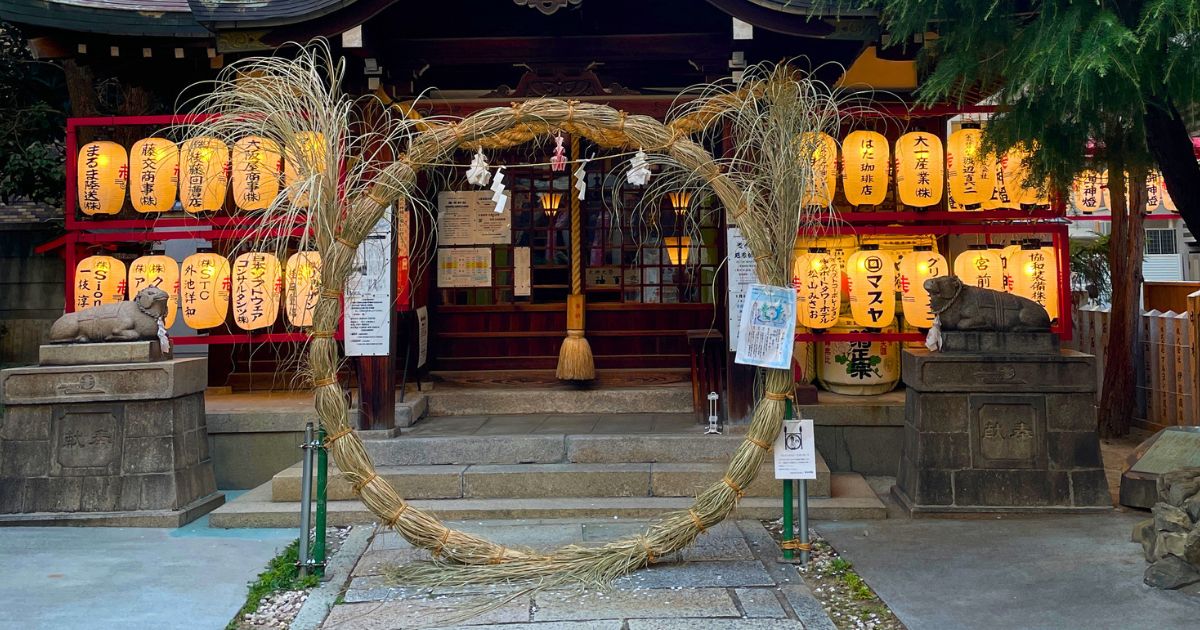
About This Seasonal Tradition
Chinowa-kuguri is a summer purification custom held at many Shinto shrines in Japan.
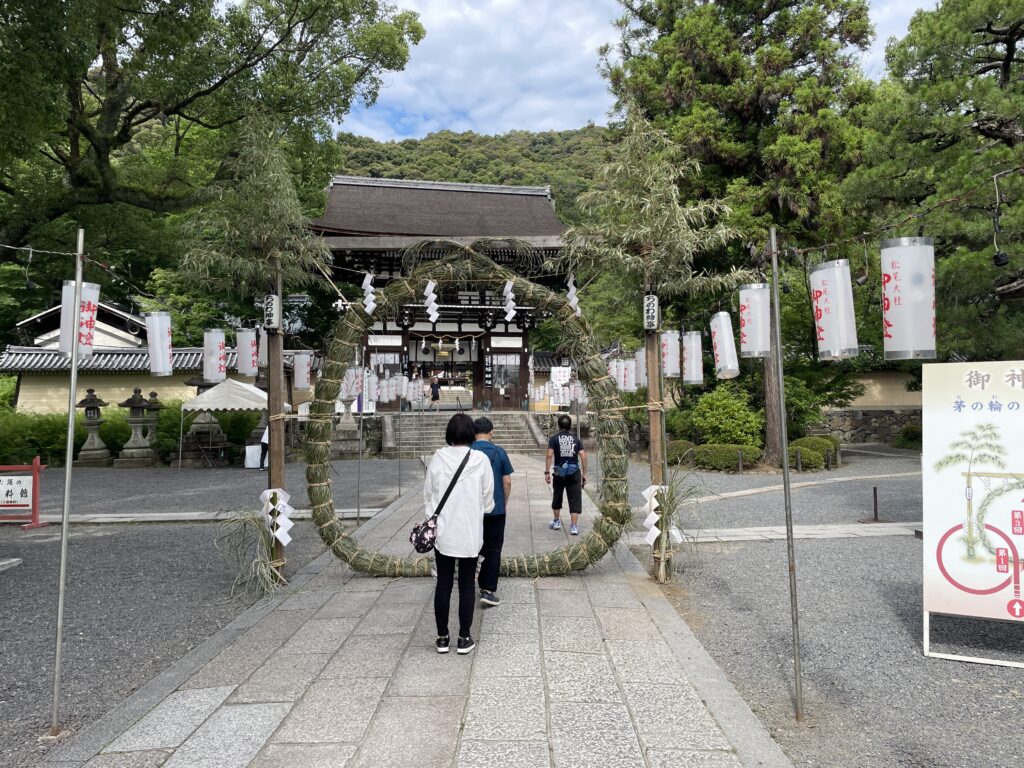
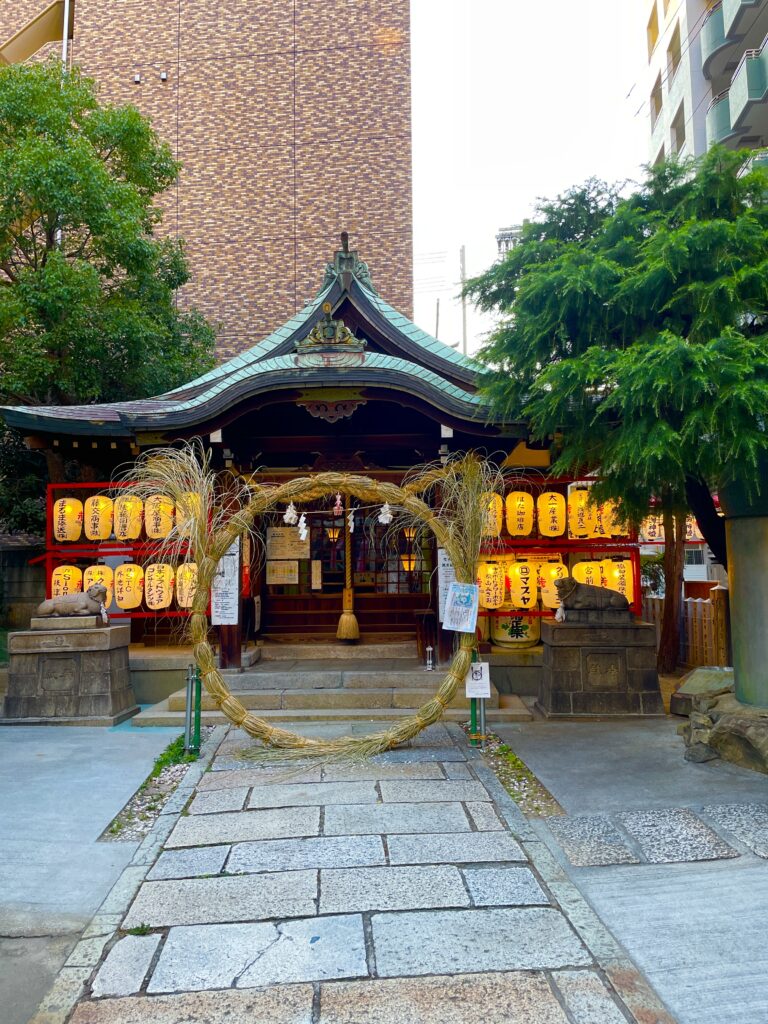
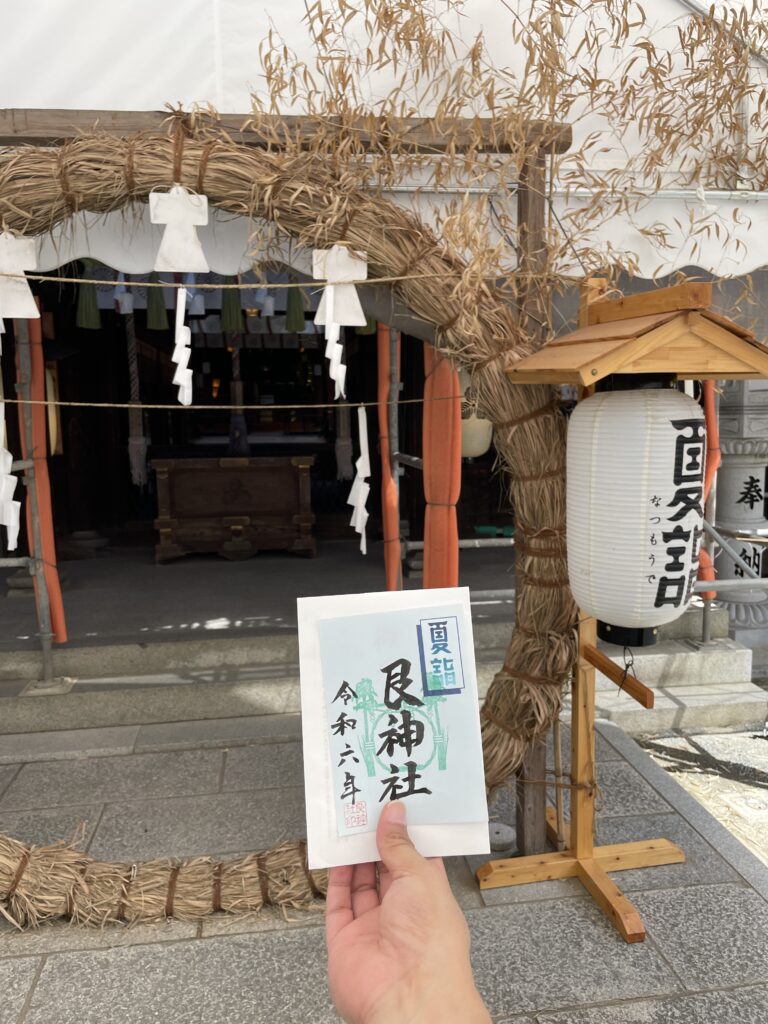
A large ring made of chigaya grass or straw is placed at the shrine, and visitors pass through it to purify themselves.
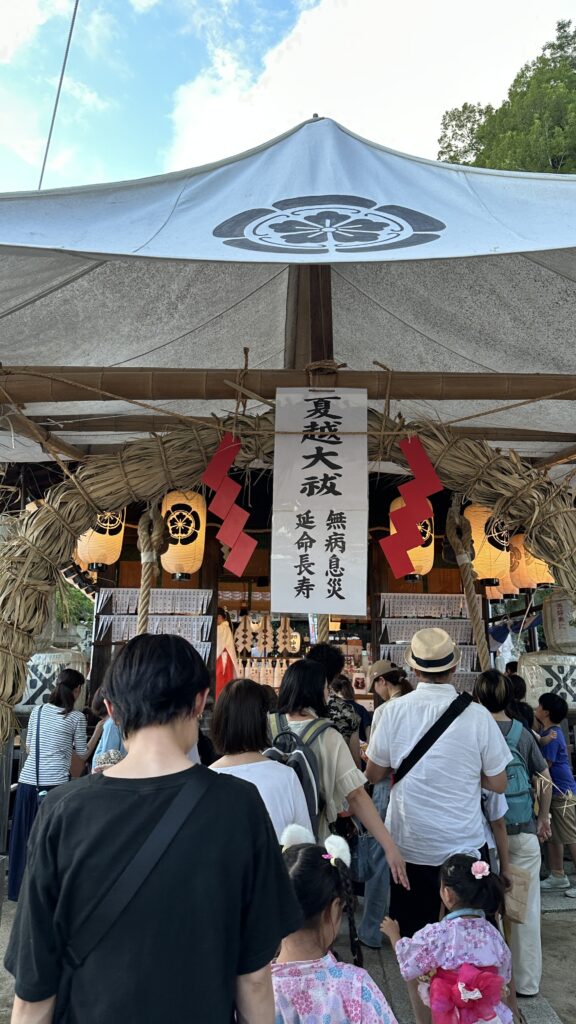
It is often connected with Nagoshi no Ōharae, the summer purification ritual held around the end of June.
Through this ritual, people pray to remove the impurities of the first half of the year and pass safely into the second half.
Photo Gallery
What Is Nagoshi no Ōharae?
Ōharae is a purification ritual held twice a year.
The one held at the end of June is called Nagoshi no Ōharae, or Nagoshi no Harae.
The winter Ōharae is held in December and is called Toshikoshi no Ōharae, or Toshikoshi no Harae.
Nagoshi no Ōharae marks the halfway point of the year.
During this ritual, people pray to cleanse the impurities, mistakes, and misfortunes that may have gathered over the past six months.
Some shrines also use hitogata, small paper figures shaped like a person, as part of the purification.
Chinowa-kuguri is one of the best-known customs connected with this summer ritual.
What Is a Chinowa?
A chinowa is a large ring made from chigaya grass, reeds, or straw.
It is usually placed in front of the shrine or along the approach.
Visitors pass through the ring as an act of purification.
The ring itself is not something to worship as an object.
It is part of a ritual movement: passing through, cleansing oneself, and preparing to continue the year with a renewed mind.
How to Pass Through the Chinowa
The way to pass through the chinowa may differ depending on the shrine.
At many shrines, visitors pass through the ring in a figure-eight pattern.
A common order is:
First, pass through the ring and turn left.
Then pass through again and turn right.
Then pass through once more and turn left.
After that, pass through the center and continue toward the shrine.
Some shrines display instructions near the chinowa, so it is best to follow the local guidance.
If you are unsure, move calmly and watch how others do it.
The most important thing is not to be perfect, but to take part with respect.
The Origin of Chinowa-kuguri
The origin of chinowa-kuguri is often connected with the story of Somin Shōrai.
In the story, Somin Shōrai offered hospitality to a traveling deity, even though he was poor.
Later, the deity told him to wear a small ring made of grass as protection from disease.
This story became connected with the idea that a ring of grass could protect people from illness and misfortune.
Over time, the small ring became a large ring that people pass through at shrines.
This is one of the backgrounds of today’s chinowa-kuguri.
The Meaning Today
Today, chinowa-kuguri is a familiar summer tradition.
For many people, it is a quiet moment to pause at the halfway point of the year.
It is not about suddenly changing one’s luck in a magical way.
Rather, it is a simple act of purification.
By passing through the chinowa, people reflect on the first half of the year, let go of what should be cleansed, and pray for health and peace in the months ahead.
Final Thoughts
Chinowa-kuguri is a simple ritual, but it carries an old seasonal meaning.
At the end of June, people pass through a ring of grass to purify themselves and prepare for the rest of the year.
It is one of the gentle ways Japanese shrine traditions are connected with the rhythm of the seasons.
A small act, a quiet prayer, and a step forward into summer.